8
Objectives
-
To develop a rapid and accurate surrogate modeling framework for bioprosthetic heart valves.
-
To predict deformation biomechanics and key performance metrics with high precision.
-
To integrate deep learning techniques to enhance computational efficiency and scalability.
Methodology
-
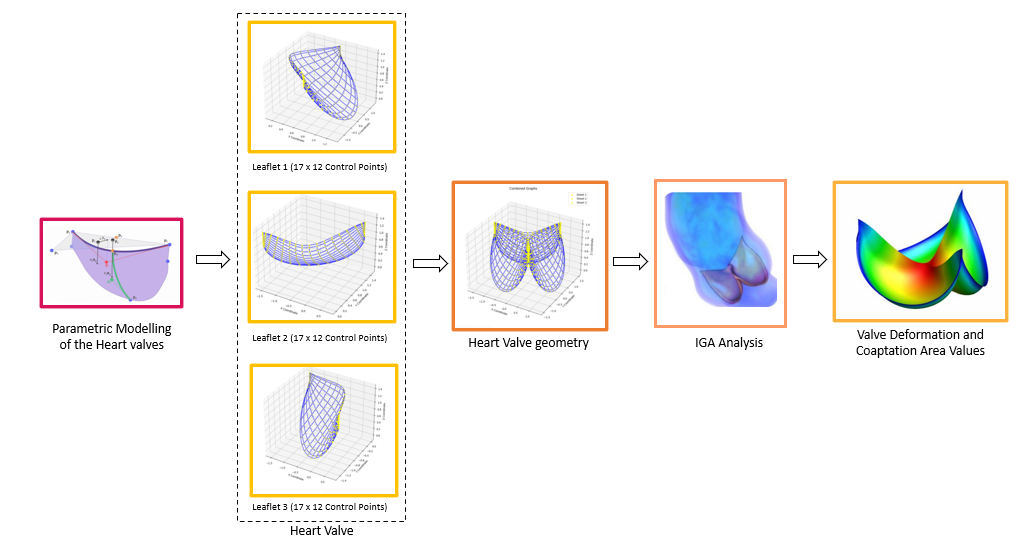
Data collection from over 18,000 simulations representing varied geometries and material properties.
-
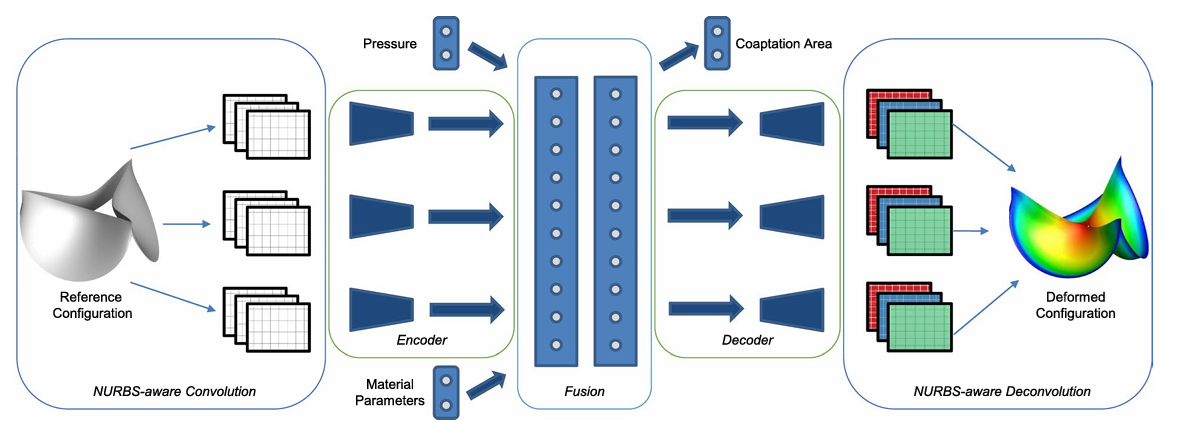
Baseline implementation using NURBS-aware convolutional networks to predict valve deformations.
-
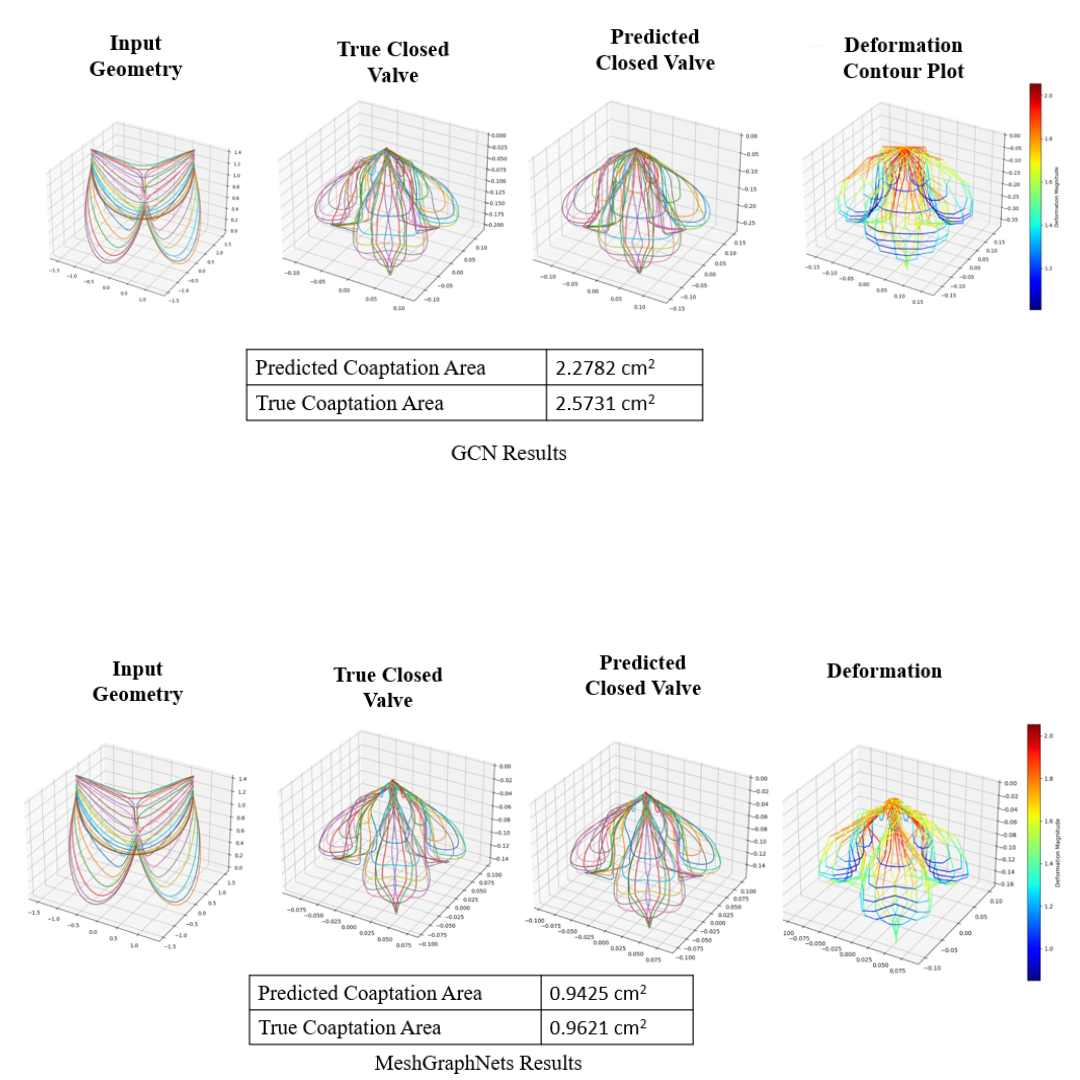
Development of Graph Neural Networks (GNNs) and MeshGraphNets to enhance spatial and topological accuracy.
-
Performance evaluation using metrics such as R² scores, Euclidean distance, and Hausdorff distance.
Results
-
R² scores improved to 0.9589 with MeshGraphNet, outperforming baseline models.
-
Euclidean distance reduced to 0.0148, ensuring precise deformation predictions.
-
Demonstrated a 30% reduction in computational time compared to traditional finite element analysis.
Future Scope
-
Dynamic simulations to replicate real-time cardiac cycles for improved valve design.
-
Integration of stress and strain analysis to predict long-term durability and fatigue life.
-
Development of AI-driven real-time adjustments for personalized valve solutions.
-
Collaboration with biomedical experts to translate computational results into clinical applications.